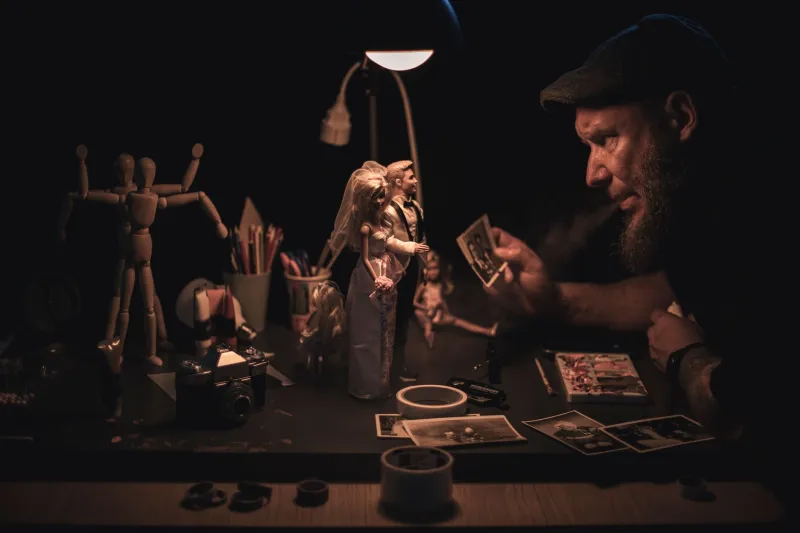
Build Your Own Museum: The Case for Keeping Everything You Make
There's a drawer in my studio — okay, it's three drawers and a shoebox — full of things that never made it. Rejected logo concepts. A voice memo where I mumble a half-formed idea for a photo series. The first draft of an essay that was, frankly, embarrassing. For years I thought of all of it as residue. The stuff left over after the real work got done.
I've changed my mind. That pile isn't residue. It's an archive. And the creators who treat it like one are quietly playing a different game than everyone else.
What a Personal Museum Actually Is
Think of it less like a filing system and more like a museum — a curated, growing record of how you think. Not just the finished pieces, but everything that led to them: the bad thumbnails, the abandoned outlines, the color palettes you tried and hated, the 2 a.m. notes app entries that made perfect sense at the time.
Most of us only keep the highlights. The portfolio shows the winner; the process disappears the moment the client signs off. But the process is where your actual value lives. A finished piece proves you can execute. An archive proves you can think — and thinking is what people pay a premium for.
Three Ways the Archive Pays You Back
It becomes a pattern detector. Spend a few hours flipping through two years of sketches or drafts and you'll start seeing obsessions you didn't know you had. Recurring themes, shapes you return to, questions you keep circling. That's not trivia — that's the raw material of a signature style. Most creators spend years chasing a niche from the outside in. Your archive lets you find it from the inside out.
It turns pitches from claims into evidence. When a client asks whether you can handle a bigger, weirder, more ambitious project, 'I think so' is a weak answer. But 'I've been experimenting with this approach for eighteen months — here are four explorations' is a different conversation entirely. I've watched a friend land a museum-adjacent commission largely because she could show a decade of small studies that proved she'd been preparing for it without knowing.
It's a content mine you already own. Every creator eventually hits the wall of 'what do I post?' Your archive is the answer. That failed experiment is a behind-the-scenes post. That old draft is a 'here's how this piece evolved' carousel. That voice memo is a newsletter. You're not manufacturing content — you're excavating it.
How to Start Without Making It a Chore
The mistake is treating archiving like another productivity system to feel guilty about. Skip the elaborate setup. Three habits are enough:
- Date everything. A file name with a date turns a folder of junk into a timeline.
- Keep the rejects. Make a 'not this' folder alongside your favorites. The dead ends are often more revealing than the hits.
- Review twice a year. Put it on the calendar like a dentist appointment. An hour with your own history will teach you more than another online course.
That's it. No apps required, though a simple folder structure or even a dedicated notebook works fine.
The Long Game Nobody Talks About
Here's the quiet truth: your archive compounds. The creator who's documented five years of process can write a book, build a workshop, or pitch a retrospective because the evidence exists. The creator who didn't has to reconstruct everything from memory — and memory is a generous liar.
American culture loves the highlight reel. We post the opening night, not the rehearsal. But the people who build lasting careers — the ones whose work feels inevitable rather than lucky — are almost always the ones who kept the receipts.
So open that drawer. Scroll to the bottom of the camera roll. What's in there isn't clutter. It's the museum of how you became good at what you do — and unlike most museums, this one keeps adding wings every time you sit down to work.