The Habits You Never Hired: Who's Really Managing Your Creative Career

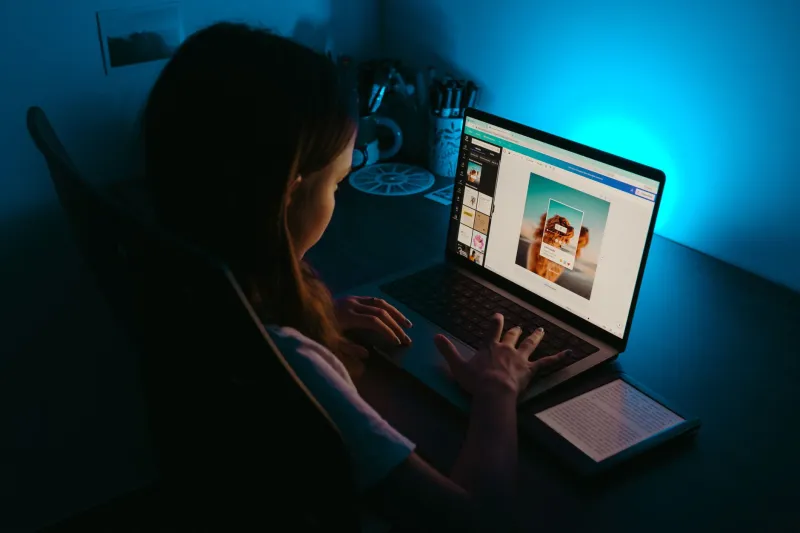
Photo by Photo by Kelly Sikkema on Unsplash on Unsplash
Somewhere between your last big project and whatever you're avoiding right now, a quiet workforce took over your career. Nobody interviewed them. Nobody signed off on their onboarding. But they show up every single day, doing work on your behalf — and some of them are actively working against you.
I'm talking about your habits. Not the glamorous ones, either. Not the 5 a.m. cold plunge routine that lives in your Instagram highlights. I mean the unglamorous, invisible stuff: the twenty minutes of doomscrolling other designers' portfolios before you touch your own work. The bio you've rewritten nine times this quarter. The folder of half-started projects you open, sigh at, and close.
Add up what those behaviors cost you in a year and you might be shocked. Add up what they've built — good or bad — and the picture gets clearer still.
Your Career Is Running on Autopilot More Than You Think
Here's the uncomfortable math. If you're a working creative, the average client win might take weeks of pitching, negotiating, and delivering. Meanwhile, the habits you repeat daily — checking your analytics obsessively, comparing your rough drafts to someone else's finished piece, starting something new the moment a project gets hard — compound quietly in the background.
Big wins get the press release. Habits get the compound interest.
The problem is that most of us never audit this hidden workforce. We treat our days as a series of conscious decisions when, honestly, they're mostly a rerun. You didn't decide to check Instagram mid-sketch today; a pattern decided for you, the same way it did yesterday and the day before. Psychologists call this automaticity. I call it the unpaid internship you never quit — except in this case, you're the intern, and the job description was written by your past self on a day when nobody was watching.
Run the Audit: Three Questions Per Habit
You can't manage what you've never inventoried. So grab a notebook and list every recurring behavior in your creative workday. The honest ones, not the aspirational ones. Then run each one through three filters.
1. What does this habit produce? Not what does it feel like it produces — what does it actually make? Rewriting your bio for the tenth time produces a marginally better sentence and a strong hit of productive-feeling procrastination. Sketching for twenty minutes produces skills, pages, and material. Be ruthless here. "It keeps me informed" is what we tell ourselves about scrolling; "it keeps me stuck" is usually closer to the truth.
2. What does it cost? Time is the obvious currency, but it's not the only one. Some habits cost momentum — like abandoning a project the moment it stops being fun, which teaches your brain that discomfort means quit. Some cost confidence, like the daily comparison ritual that leaves you feeling behind before you've started. Some cost identity: every time you half-start something, you cast a small vote for being a person who doesn't finish things.
3. If a stranger did this, what would I predict for their career? This is the killer question. If you watched an assistant spend forty-five minutes a day tweaking their portfolio site's fonts while never sending a single pitch, you'd have a very clear forecast. Sometimes we need to see our own behavior from the outside to understand where it's headed.
Keep, Kill, or Renegotiate
Once you've run the audit, every habit lands in one of three buckets.
Keep the ones quietly paying dividends. The daily pages. The Sunday planning session. The habit of finishing small things before starting big ones. These rarely feel impressive, which is exactly why they fly under the radar while doing heavy lifting. Protect them fiercely.
Kill the ones actively embezzling from you. Doomscrolling peers is the big one — it masquerades as research while functioning as a slow drip of discouragement. Also on the chopping block: perfectionist tinkering (the bio, the logo, the website footer), and the reflex to announce plans instead of executing them.
Renegotiate the ambiguous ones. Some habits aren't good or bad; they're just under-structured. Checking email isn't evil — checking it forty times a day is. Social media can be a genuine networking tool or a total sinkhole, depending on whether you show up with a purpose or just a thumb. Set boundaries: a window, a reason, an end time.
Hire Your Replacement Habits Deliberately
Here's the part nobody mentions about breaking habits: nature abhors a vacuum. If you delete the scroll without installing something in its slot, the scroll comes back — usually stronger.
So be intentional. If your morning used to start with other people's work, start it with your own — even ten minutes of warm-up sketching or freewriting. If you've been ending projects early, install a rule: you can't open the new idea until the current one has a finished draft, however rough. Rough drafts are allowed to be terrible. Abandonment is the only real failure.
And build one habit that most creatives skip entirely: the weekly review. Twenty minutes every Friday to ask, what did I actually make this week, and what actually moved? It sounds boring. It's the single highest-leverage habit on this list, because it's the habit that audits all the other ones.
The Payoff Nobody Claps For
Nobody will ever congratulate you for not rewriting your bio this week. There's no award for the scroll you skipped or the half-started project you pushed through to a rough finish. Habits are the anti-launch — no announcement, no engagement spike, no dopamine.
But look at the working creatives you admire and I promise you'll find the same thing: not a string of miracles, but a payroll full of small, boring, well-chosen habits that kept showing up when motivation didn't. Their careers weren't built by the wins. The wins were just the visible receipts for work their habits had been doing all along.
Audit the workforce. Fire the freeloaders. Give the raise to the ones earning it.
Your future portfolio is being written right now — in the stuff you do when nobody, including you, is paying attention.